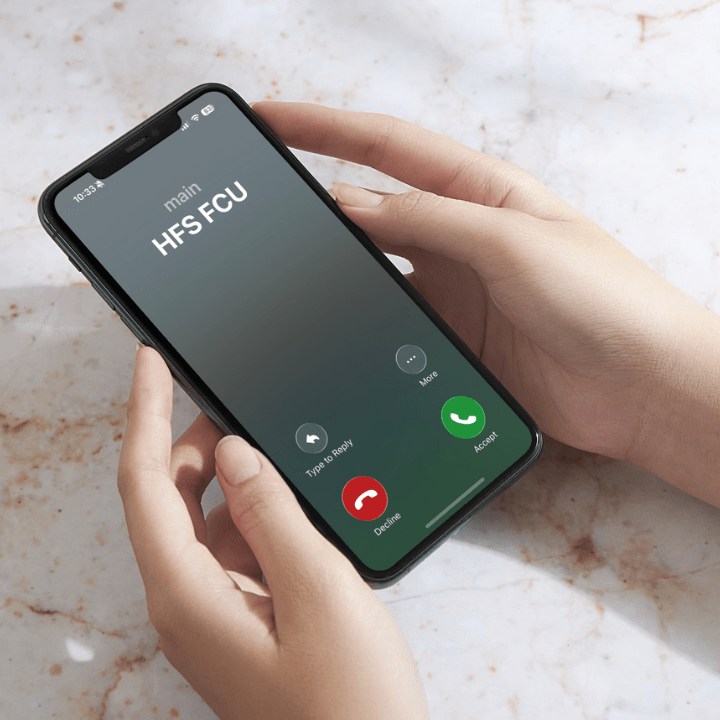
What is Call Spoofing? How to Spot this Scam
Have you received a call from someone claiming to be from an organization and asking for your personal or sensitive data? This could be “spoofing,” a tactic where scammers alter the caller ID to appear as a bank, credit union, or government agency. Their goal is to trick you into giving up information like your Social Security number, credit card details, or bank account information.
Recently, spoofing incidents targeting financial institutions and credit union members have increased. In this post, we outline ways to identify these scams and steps HFS FCU members can take to protect their information.
Call Spoofing: Understanding the Basics
Call spoofing occurs when a scammer disguises their phone number to appear as a trusted entity. This tactic is used to access confidential information. HFS FCU has received reports from members about call spoofing, so it’s important to know how to recognize and handle these scams.
First, it’s important to distinguish a spoofed call from a typical call. A spoofed call displays a fake local number, or even your own, sometimes with an official-looking name. A typical call shows the caller’s real number and name.
Call spoofing is popular because the technology is easy to access and affordable, making it an attractive tool for scammers.
How Does Call Spoofing Work?
Spoofing is a common scam that often uses VoIP services to make internet-based calls rather than traditional phone lines. Scammers use software to enter any phone number they want to display on your caller ID, often mimicking the numbers of credible institutions.
Any number can be spoofed, which makes these scams convincing. A scammer could use HFS FCU’s exact number and urge you to share sensitive information or verify codes.
Common Call Spoofing Scams Targeting Credit Union Members
The best way to protect yourself from caller ID spoofing is to be aware of common scenarios and hang up before scammers get the information they want. Here are scams credit union members often face:
- Scammers impersonate HFS FCU and claim there is suspicious activity. They request urgent account verification. Mobile deposit and bill pay scams are also common.
- Callers impersonating a government agency like the IRS, Social Security Administration, or a law enforcement agency attempt to gain your Social Security number or other sensitive, personal information.
- Callers may pretend to be a utility company, tech support, or emergency services, requesting immediate payment for a fabricated service.
How to Detect Call Spoofing: Warning Signs to Watch For
How can you identify if you are receiving a spoofed call? Watch for these warning signs:
- Callers that create a sense of urgency and ask you to take immediate action.
- Requests for bank account information, PINs, or Social Security numbers.
- Threats of account closure or legal action if you fail to take fast action.
- Callers that are seemingly reading from a script and appear confused or thrown off if you ask them a question that their script doesn’t prepare them to answer.
- Unusual background noises.
- Callers pressure you to stay on the line and don’t offer callbacks. Let unknown callers go to voicemail, then return the call from a trusted number, not the caller ID display.
A legitimate HFS FCU representative will never call to request account numbers, Social Security numbers, passwords, or other confidential financial details. Learn more about protecting your information here.
What HFS FCU Won’t Ask You Over the Phone
To clarify, HFS FCU will not request your full Social Security number, full account number, banking passwords, PINs, or credit card information over the phone.
If you think you’re receiving a spoofed call claiming to be from HFS FCU, immediately hang up and call HFS FCU directly using the number on our official website. Do not engage further with the suspicious call.
Protect Yourself from Call Spoofing: Step-by-Step Actions
How can you avoid call spoofing scams? Here are some best practices:
- Never share sensitive information over the phone, especially if the caller is unsolicited.
- Recognize the signs of a spoofing scam and end the call if necessary. Instead of relying on unsolicited communication, always contact the organization or institution using its official number to verify any requests.
- Use call-blocking apps or carrier services to prevent spoofed number calls. You can also register with the National Do Not Call Registry.
- Enable two-factor authentication for all your accounts to add an extra layer of security. Learn more about fraud prevention in HFS FCU’s education center.
If a phone call seems suspicious, trust your instincts and disconnect without engaging. Contact the organization using a trusted number to confirm any requests before providing information.
What to Do If You’ve Been Targeted by a Call Spoofing Scam
If you’ve answered what you believe is a spoofing call, it’s essential to respond appropriately to protect your information and potentially prevent future identity theft. Here’s a look at what you should do:
- Hang up the phone immediately without providing any information the scammer is asking for.
- Contact HFS FCU (or the organization the caller is impersonating) to verify the scam and ensure your accounts are secure.
- Report the incident to the FTC, FCC, and local authorities.
Early reporting helps protect your accounts, information, and others from financial loss. Monitor your bank accounts for unusual activity, especially after a spoofing attempt. Consider setting up fraud alerts if you suspect your personal information is compromised. HFS FCU members should watch for money mule scams.
Take Control of Your Security with HFS FCU
At HFS FCU, we proactively monitor and educate our members about emerging scams, including call spoofing. We encourage members to set up security alerts and regularly review our educational resources to stay informed about the latest threats. If you have questions about suspicious calls or account security, contact us immediately. Take action today by contacting HFS FCU to learn more about the measures we’re taking to keep you safe.
FAQs About Call Spoofing
Can scammers really make their number look exactly like HFS FCU’s phone number?
Yes. Scammers can use ID spoofing technology to impersonate HFS FCU (or any credible organization) to trick people into thinking a call is legitimate. They may impersonate HFS FCU to steal personal information and gain access to your bank accounts.
If I answer a spoofed call, can they access my phone or accounts?
Answering a phone call won’t automatically provide them with access to any confidential information. However, if you provide the caller with passwords, account information, or other personal details, they could gain access to these platforms.
Should I block numbers that appear to be spoofed calls from HFS FCU?
Yes, you should block any numbers you believe are spoofed. However, don’t think that blocking one number means a scammer won’t try to spoof you again. They’ll likely call back from another number, so knowing the common signs of a spoofed call remains important.
Will HFS FCU ever call me about suspicious activity on my account?
Yes. However, when we contact you to alert you to any suspicious activity on your account, please be assured that we will never ask for any sensitive information. If you’re contacted by someone claiming to be from HFS FCU asking for this information, proceed with caution. It’s best to hang up and call HFS FCU directly if you’re unsure.
How can I report a spoofed call claiming to be from HFS FCU?
We suggest filing complaints directly with the FTC, FCC, and HFS FCU. Ideally, we can gather data to stop scams, hold scammers accountable, and prevent other HFS FCU members from being spoofed in the future.
Are there apps that can help detect or block call spoofing attempts?
You might try apps such as RoboKiller, Truecaller, Nomorobo, and Hiya, which work to identify and block spam calls. Many cellphone providers also offer call screening as an add-on to help people avoid scams.